What are stablecoins, how did they appear, what are the types of these assets, their role and the future in the cryptoindustry? Find the answer to these and other topical questions in our article.
Stablecoins help to attract more investors to the cryptoindustry by providing a stable asset in an otherwise volatile market. Originally devised as a basic tool to add price stability to crypto markets, stablecoins are now flourishing as versatile financial instruments for diverse decentralized finance (DeFi) products, remittances, payment systems and central bank digital currency (CBDC) experiments.
Just as the cryptoworld has evolved, so have stablecoins, with new models, additional collateralization mechanisms, regulatory requirements, and more institutional adoption.
In this article we consider the history of stablecoins, from the first implementation of a fiat-collateralized token all the way to the more complex algorithmic and hybrid tokens that exist today, and show you how they have fundamentally changed the way that people interact with money on-chain and off.
Let’s start with a stablecoin definition. What is a stablecoin? Stablecoins are cryptographic tokens built on blockchain technology the main purpose of which is to keep their value relatively stable, for example, against fiat money like the US dollar or the euro. Thus, stablecoins are not so unpredictable as traditional cryptocurrencies, but they are intended for price shifting and thus best suited for installment payments, reimbursement, and trade.
With a global market value exceeding $208 billion, stablecoins are a type of digital asset used for cross-border payments, corporate treasury and financial services in developing markets. It is now integrated with the token ecosystem with certain conditions under protocol 1.0. As regulations are catching up and enterprise adoption is taking speed, banks are confronted with a major question: “How to interact with these new assets, and where is our place in this new world?”
Here we also explore the current state of stablecoins; regulatory trends to watch; and the future of this type of asset.
What is a stable coin in its essence? Stablecoins were created to satisfy the concern of the native price assumption of cryptocurrencies by providing a relatively consistent mode of exchange that works inside the crypto place. In 2014, BitUSD was the first stablecoin developed on the BitShares blockchain.
The evolution of stablecoins is an ongoing attempt to remain price-stable while considering trade-offs between decentralization, security, and regulatory compliance. Various models, with model B and C designed to overcome the drawbacks of their predecessors, successively came out. Here is a brief look on the major forms of stablecoins and how they have developed.
These were the first wave of stablecoins, which were fully collateralized 1:1 with fiat-currency reserves on deposit with centralized organizations. Their pros are price stability, high liquidity, low-cost and fast transactions. As for the cons, they are centralized (and can be manipulated), trust and transparency in audits. The most widely-known cryptocurrency examples are: Tether (USDT), USD Coin (USDC), TrueUSD (TUSD).
These stablecoins are pegged to dollar value, and backed by more than 100% of the value in another crypto (such as ETH), resistant to volatility and smart contract management. They are more decentralized than fiat-backed alternatives, backed by on-chain transparent collateral, yet have overcollateralization requirements and are exposed to crypto market risk. The list of stablecoins includes DAI (by MakerDAO), and sUSD (by Synthetix), and others.
Such coins use algorithmic means like increasing or decreasing supply to hold its peg. The pros are capital efficiency, and no need for big reserves, while the cons are high risk for depegging, systems vulnerability to market sentiments. TerraUSD (UST, no longer exists), Ampleforth (AMPL), FRAX (at least initially) are some of the examples of these.
The stablecoin trilemma is the challenge of designing a stablecoin that is decentralized, price-stable, and capital efficient all at the same time. In other words, current stablecoin examples usually need to sacrifice one of these three to obtain the other two.
The three things aren't able to work harmoniously because these components are frequently at odds. For instance:
In other words, the stablecoin trilemma is a trade-off where stablecoin designers find it hard to combine three ideal properties of a stablecoin at the same time.
Reaching new milestones and seeing new trends this year stablecoins, cryptocurrencies pegged to an external asset like the US dollar, are being used for increasing by many in the cryptocurrency space. From $2 billion in 2019, the market is now well over $230 billion in early 2025 with embedded use cases in both DeFi and traditional finance.
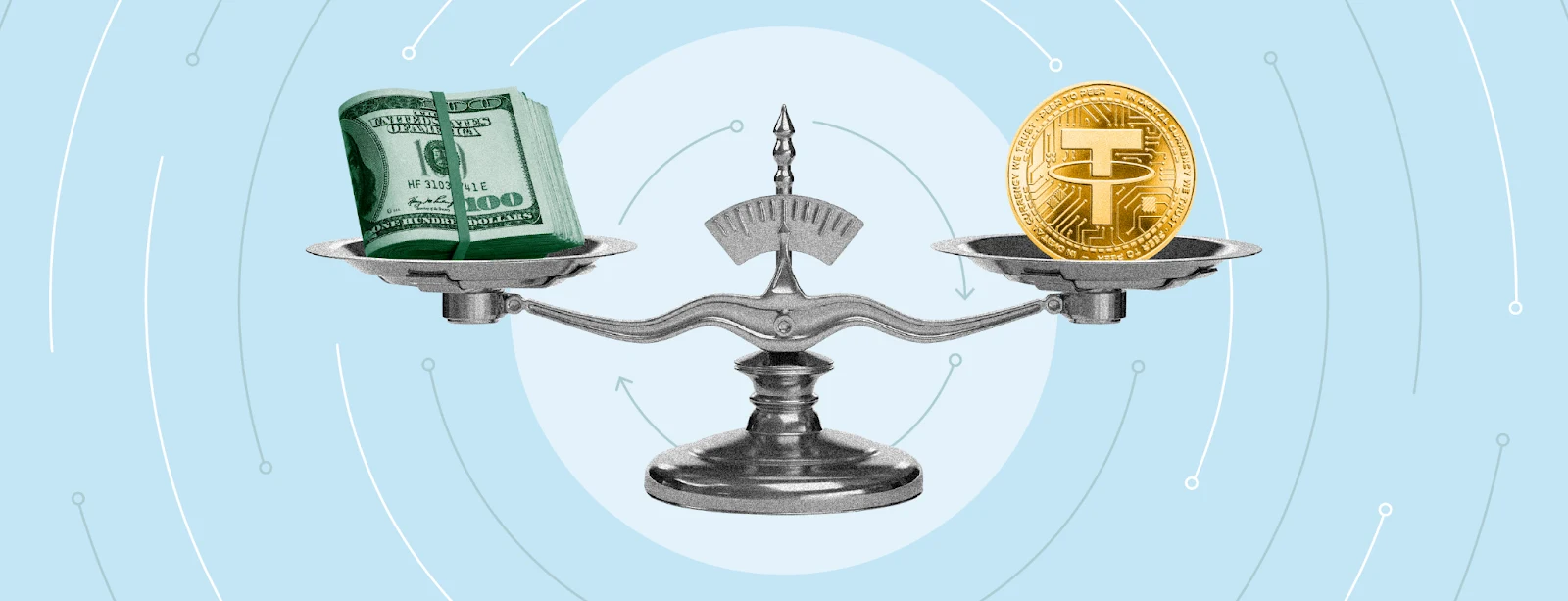
The history of stablecoins started in 2014, a very early year in crypto terms. At that time digital currencies such as Bitcoin were rife with extreme price volatility. You might purchase a coffee with BTC, but just an hour later its value doubles! It was clear crypto wasn’t good for everyday payments. This led the cryptocommunity to a simple but profound thought:
_____________________________________________________________________________
“What if we made a crypto token with the benefits of Bitcoin, and stability of the US dollar?”
_____________________________________________________________________________
That concept led to the creation of the best stablecoin – USDT (Tether). What is USDT? Its mechanism was straightforward:
Tether quickly became the unofficial unit of account on crypto exchanges. Bitcoin was no longer based on the US dollar, but on the BTC/USDT pair. For a long time, USDT has been considered as crypto’s “digital dollar.”
But that caused trust issues:
_____________________________________________________________________________
“Where, exactly, are Tether’s bank reserves? Do they really have enough dollars to support every USDT?”
_____________________________________________________________________________
These worries prompted investigative reports, regulatory scrutiny, and periodic “depegging panics,” when the price of USDT plummeted to $0.90. Tether survived, but the episode served as a lasting lesson: trust requires transparency, or regulation.
Algorithmic stablecoins were created in response to USDT’s credibility crisis and were a new generation of more transparent, regulation-friendly stablecoins:
This period was a turning point. Stablecoins had become not only settlement devices for exchanges, but integral to DeFi (Decentralized Finance) in the protocol stack.
Thus users started lending USDC on Compound or Aave to earn interest, added DAI to the Uniswap liquidity pools for farming rewards, and collateralized synthetic assets with BUSD on Synthetix.
By the end of 2020, the “DeFi Summer” had reached a fever pitch. The combined market cap of stablecoins surged well over $30 billion, establishing them as critical infrastructure within crypto’s financial ecosystem.
Stablecoins really came to a wider audience’s attention with a spectacular collapse:
When Terra’s algorithmic stablecoin UST collapsed in May 2022, it did so precipitously. Owing to bad economic design and large redemptions, UST broke its $1 peg, trending to < $0.10 in several days. Some $40 billion of value was erased in moments, leading to a domino effect of failures across crypto firms.
This created two key results from this event:
Thus issuers changed tactics to seek non-retail licenses and court financial regulators. Compliance became a priority.
As of 2023, stablecoins had transformed from obscure cryptocurrencies into a critical economic infrastructure, accepted by nations and financial empires. Several overarching trends guided the times:
No more “digital dollars,” stablecoins became the OS of on-chain finance — driving everything from payments to yield strategies.
Modern Innovation & Hybrids
The advent of hybrid stablecoins and nuanced algorithmic stablecoin models represent some of the more recent advances in stablecoins. Hybrid stablecoins, as their name suggests, offer a blend of fiat-backed/crypto-backed solutions and algorithmic designs. In the meantime, the evolving algorithmic stablecoins are developing higher level smart contracts, multi-source data feeds for managing supply, and better blockchain scale.
Hybrid stablecoins seek to address the weaknesses of both: fully-backed stablecoins (fiat or crypto) and algorithmic stablecoins, offering their combination. They typically employ a mixture of traditional collateral (fiat or alternative cryptocurrencies) and algorithmic mechanisms (smart contracts) to stay tethered to a peg.
For instance, FRAX plans to keep status by being partially collateralized and partially algorithmic, and TrueUSD (TUSD) has fiat-backed reserves plus on-chain mechanism to adjust supply.
As the stablecoin ecosystem continues to grow up and out, beyond the fiat-backed and algorithmic models that marked genesis movements, generations old, a new wave of projects are bringing stablecoins designed for scale, yield generation, regulation, and deep integration into both DeFi and the real-world asset economy. The following are some of the most prominent new stablecoins that are changing the landscape of digital value:
This is a tokenized yield-bearing USD-backed stablecoin, which is backed by 30 day U.S. Treasuries and bank deposits. USDY (Yieldcoin) is issued by Ondo Finance and fulfills a 1:1 peg with U.S. dollar-denominated assets.

It provides passive yield for its holders by paying out interest earned from the U.S. Treasuries, providing an ideal stable asset for users with interest income requirements. A Stablecoin for Institutions and Compliant Defi USDY is Fully Backed, Permissioned, and Transparent for Regulated Markets.
USDM is a 100% collateralized, interest-bearing stablecoin pegged to the U.S. Dollar and backed by U.S. Treasuries. This asset is under the Digital Asset Business Act in Bermuda. USDM is structured as a regulatorily compliant, yield bearing stablecoin in which yield is earned by the issuer, not directly by the user (so it isn't classified as a security). The coin is intended for institutions and on-chain capital allocators seeking regulated exposure to U.S. yield instruments without traditional bank counterparty risk.
USDe is a delta-neutral synthetic stablecoin, collateralized in ETH and short leveraged on ETH perpetual futures. Hedging staked ETH (or equivalent crypto collateral) with short futures to stay delta-neutral created this asset. It closes the loop completely on fiat or real-world collateral, rendering it entirely crypto-native, and hence, scalable. USDe holders can choose the "Earn Program" (through the sUSDe token) to receive yield generated from the basis trade (spread between staked ETH yield with short perpetual funding).
LISUSD is Collateralized Decentralized Stablecoin, secured by Liquid Staking Tokens (e.g., BNBx, ETHx) and crypto-assets. The stablecoin is native to Lista DAO, collateralized by overcollateralized assets including liquid staking tokens (LSTs). It’s native on BNB Chain, and engineered for interconnection with DeFi apps, farming products, and DAOs, with a MakerDAO-like stablecoin issuance mechanism plus new generation staking derivatives for efficient capital utilization.
Despite all their benefits, stablecoins face a range of critical challenges and risks. As the adoption and size of stablecoins continues to grow, the risks below become progressively more meaningful:
Stablecoins are designed to be pegged to a fixed value, typically a fiat currency like the U.S. dollar. But a number of other technical or financial mishaps could cause depegging, when a stablecoin’s value falls out of line with its target.
This can lead to the loss of user trust, systemic tremors in DeFi and loss of savings and liquidity.
Digital payment and settlement systems are seeing growing applications of stablecoins. Their increasing involvement in financial plumbing brings new threats to old and new payment rails alike.
This can lead to Interruptions to trade, DeFi lending, or cross-border remittance flows, and less credibility as a means of payment.
As stablecoins are more widely adopted, and rise in market cap, they become systemic risk for the rest of the economy.
This can lead to financial contagion in both the crypto and traditional markets, in particular if stablecoins form the base of significant DeFi or payment systems.
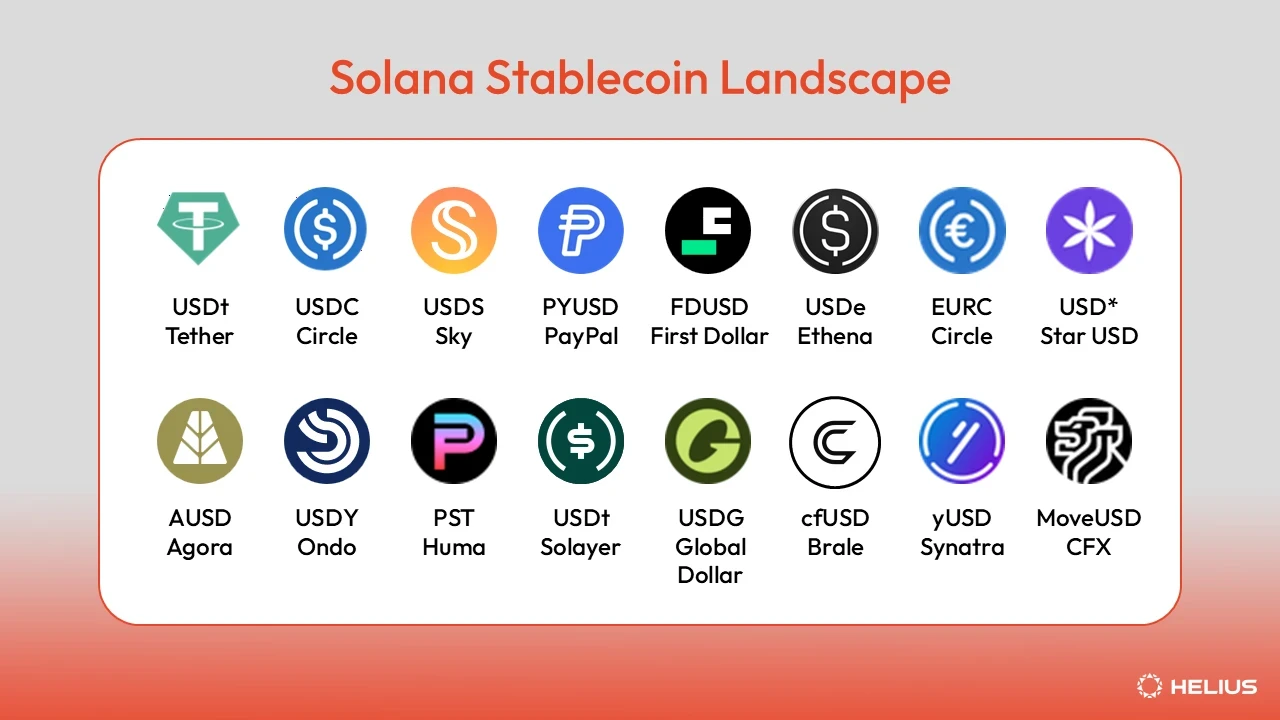
The more significant stablecoin issuers are Tether, with its USDT stablecoin, and Circle, which offers USDC. Other notable players include Ethena with USDe; and First Digital Labs. Companies like PayPal are hitting the stable coin market with their own versions such as PYUSD: Tether stablecoin (USDT), Circle (USDC), Ethena (USDe), First Digital (FDUSD), PayPal (PYUSD). There are also some other known issuers, like Dai (DAI), and TrueUSD (TUSD).
Crypto-specific stablecoins have become the backbone of the crypto economy, bridging a gap between traditional and decentralized systems. By mid-2025 the stablecoin market is expanding in size, complexity, and relevance, with maturing use cases, more attention from institutions, and greater regulatory attention.
The stablecoin ecosystem is not a niche in crypto anymore, its basic infrastructure for payments, for trading, for DeFi, for tokenizing real world assets and more. It is still grappling with regulatory, technical, and design challenges, yet the evolving state of stablecoins is marked by increasing legitimacy, rapid innovation, and deep usage within both digital and traditional financial systems. As stablecoins evolve, the future of money will increasingly be influenced by them.
Regulators are paying closer attention to stable coins amid worries about financial stability, consumer protection and the potential use of the digital tokens for financial crime. Regulators are struggling with how to regulate these digital assets, trying to support innovation, on the one hand, while protecting investors and other main street users of the system, on the other hand.
Key Regulatory Impacts include financial Stability Risks, consumer Protection problems, Harmonization Efforts, and Potential for Stricter Oversight.
Stablecoins have come a long way from being mere trading instruments to constituting integral parts of the global digital economy. Their market evolution mirrors the rising demand for digital dollars, as well as a trend toward greater harmony between decentralized and conventional financial systems. By 2025, several significant developments are influencing the ongoing expansion and evolution of the stablecoin landscape:
The continued evolution toward yield generation, cross-border utility, RWA support, and regulatory compliance indicate the next iteration of stablecoin development will be even more entrenched within crypto-native systems and traditional financial rails.
With the growth of the matured stablecoin ecosystem, there are several main participants with their own design models, applications, and trade-offs. Here we provide a comparison of the most popular stablecoins as of 2025, with other important characteristics such as collateral type, issuer model, transparency, regulatory situation, and suitability for use case.
| Stablecoin | Type | Backing | Issuer/Protocol | Transparency | Regulatory Status |
|---|---|---|---|---|---|
| USDT (Tether) | Fiat-backed (centralized) | USD, commercial paper, short-term treasuries | Tether Ltd. | Limited (quarterly attestations) | Offshore (BVI-based) |
| USDC (USD Coin) | Fiat-backed (centralized) | USD and U.S. Treasuries | Circle (regulated in the U.S.) | High (monthly attestation +real-time reserve reports) | Tough oversight by the U.S. (Circle is looking for full regulatory compliance) |
|
DAI (MakerDAO) |
Crypto-backed (decentralized) | ETH, USDC, RWA, wstETH | MakerDAO (DAO governance) | On-chain + community audits | Indirect (USDC partially subjected to U.S regulations) |
| FDUSD (First Digital USD) | Fiat-backed | US dollar holdings in Hong Kong banks | Medium-High (monthly attestations) | First Digital Group | Regulated in Hong Kong |
| PYUSD (PayPal USD) | Fiat-backed (centralized) | USD and cash equivalents | Paxos (on behalf of PayPal) | High (monthly attestations, NYDFS oversight) | U.S.-regulated under New York BitLicense |
Each of the major stablecoins combines a different mix of decentralization, trust, compliance, and capital efficiency. USDT has the most liquidity and volume, used for the vast majority of trading (my feelings are largely interchangeable), USDC is great for regulatory clarity. Decentralized alternatives such as DAI prove to be successful in DeFi, with next-generation entrants, USDe, USDM, and USDY providing yield and connection to real-world assets.
The stablecoin market has much room for growth, and some estimates project it will double in size from where it is today. Some go so far as to predict a market which could grow to $3.7 trillion by 2030, as crypto becomes more enmeshed with traditional finance and with positive macroeconomic circumstances. But the market’s expansion will depend on reducing risks related to things like regulatory holdups as well as fraud and security issues.
We are in the midst of a major paradigm shift in the world of payments where stablecoins, cryptocurrencies pegged to a stable asset, such as the U.S. dollar, are set to make a leap in growth and integration in the world of finance. They are worth about $260 billion today, but predictions indicate that their market cap would almost double, to about $500 billion, by the end of 2026. This growth is driven by broader use cases outside of cryptocurrency trading, such as payments and remittances, and as a form of holding rather than trading other currencies.
Stablecoins may have difficulties ahead but their potential as change agents in the financial sector is major. With more regulatory certainty, adoption among institutions, and technological innovations, stablecoins may start to play a bigger role in the world of finance. As always, though, they will need to watch their step, as greater risk exposure and regulatory issues still need to be addressed.
So, here we have considered what are stablecoins. They have come a long way since their Paleolithic phase as single-dimension dollar-pegged tokens used in the crypto trading world. Today, there are a variety of dynamic and rapidly evolving digital assets that sit at the nexus of blockchain technology, global finance, and myriad regulatory changes. From centralized fiat-backed versions like USDT and USDC to decentralized options such as DAI and novel hybrids like USDe, stablecoins have metastasized in form, function and effect.
As they evolve, stablecoins are not just changing the way value is held and transferred on-chain but access to financial services around the world. They form the infrastructure behind DeFi, a gate for global payments, a key to real-world assets — and a potential building block for future central bank digital currencies (CBDCs).
However, with innovation comes responsibility. As stablecoins continue to scale, they will need to take on the challenges of stability, transparency, regulation compliance, and systemic risk. The next stage of evolution will probably be about getting the balance right between decentralization and surveillance, efficiency and safety, openness and control.
In this transformative odyssey, stablecoins do not merely adjust to the digital economy; they are helping build it.